
AN INTERVIEW WITH ZENZILE, 40 YEARS ON
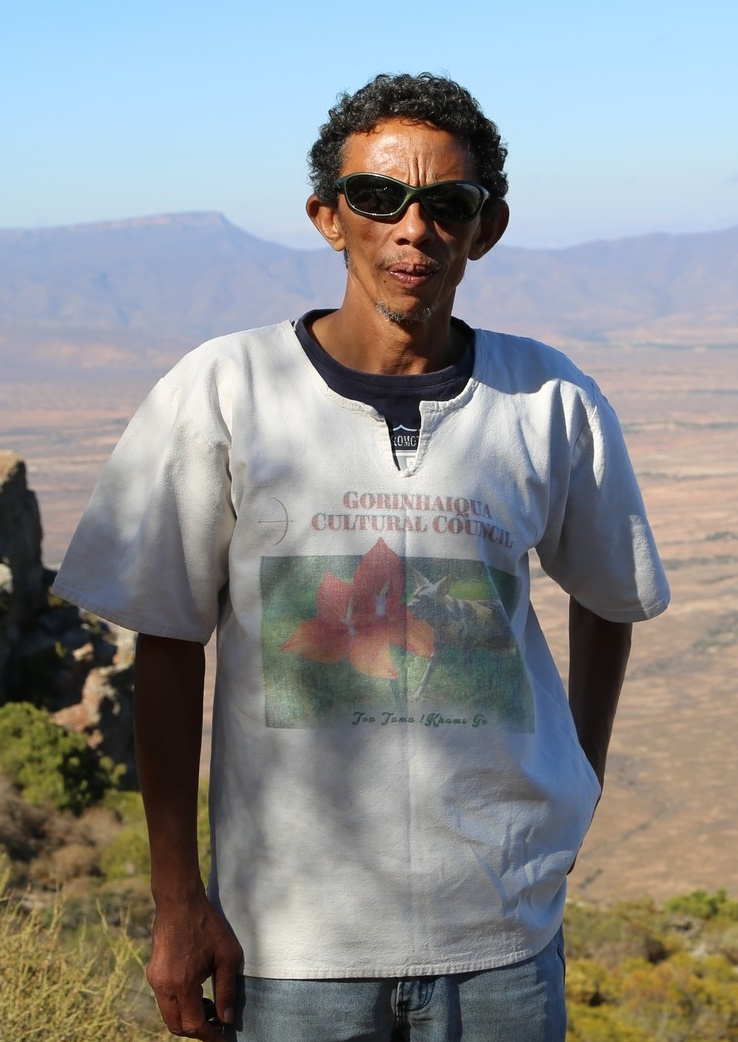 For nearly 40 years, most of you have probably known of Zenzile (if you have known of him at all) only as a guest at Phish's 2/3/86 and 4/1/86 shows - and even then might have regarded him as a random interloper, interjecting otherwise unusual politics into Phish shows, and may have wondered who he was and why he was there.
The former of those two shows was actually a benefit performed for the African National Congress, a critical component in challenging and eventually bringing down the apartheid regime in South Africa. It therefore featured Zenzile, not arbitrarily but topically and intentionally, reciting some of his revolutionary poetry during the encore of four songs. (Phish has performed only one of those four a second time, as far as we know, at the 4/1/86 show as backing for more recitations.)
This was by far the most political of Phish's known performances (moreso even than the 5/16/95 Voters for Choice show, and much more than other previous benefits such as those for NORML, OXFAM, and Farm Aid). Zenzile was also the most political of the more than 300 guests the band has had one stage. Yet, still, few Phish fans even know who he is, other than from the show notes on those two performances.
I'm therefore honored to have been exchanging emails with Zenzile over the past 18 months, learning about his (and Phish's) early days at Goddard College, his time before and after those shows, and his broader historical role.
For nearly his entire life, Zenzile has been a fighter for South African rights. He was exiled from his home for sixteen years. His political stances at Goddard led him to leave the school in 1988 after he led the occupation of an administrative building, demanding a Third World Studies program. He has long been active in politics; for example, he publicly protested against Linda Ronstadt when she continued to play Sun City. Now out of exile, he is known by his full name of Zenzile Khoisan, and he is one of the key researchers for South Africa’s Truth and Reconciliation Committee. Zenzile even served as the assistant to the Coordinator for Human Rights Violations Investigations.
In his own words, Zenzille "started off at Goddard in the winter of 1986 when I registered there in February 1986. I was one of the students with John, Ben, Zack Shijan, [and] Jon Fishman (drummer for Phish) who was allocated residence in the Wolpe [ed: Wolper?] dormitory.
"I had actually encountered the guys from Phish when I visited a club in Burlington in January 1986, when I visited a club that at the time was called Hunts. I also visited the home where Page, Jon Fishman, Greg, and Trey were living in Burlington, and they invited me to read some of my poems, including 'Exile Shadows', 'The Pendulum', and 'Soweto Revisited' with them.
"I think the original introduction was through some of the activists in Burlington who were involved in the anti-apartheid movement at the University of Vermont and within various communities. I also participated when Phish opened for Allen Ginsberg and Margaret Randall at the Burlington Town Hall."
Zenzile also performed with others at Goddard, where "Phish was the in-house group which regularly played gigs in the Haybarn Hall." (It is therefore likely that there are other early Phish gigs at Goddard of which we're not aware, as "in-house group" implies more than the 14 Goddard performances that we currently list on Phish.net: 2 in the Haybarn Theater, 3 in the Sculpture Room, or 9 at Goddard College generally - and some of the latter, were probably in one of those former specific venues.)
"At Goddard, I was enrolled and studied ecology with Dan Chordorkoff, media with Eric Zinsky, creative writing with a lecturer called Nikki, environmental studies with Charles Woodard, and also was part of the radio group where I hosted a weekly show on WGDR.
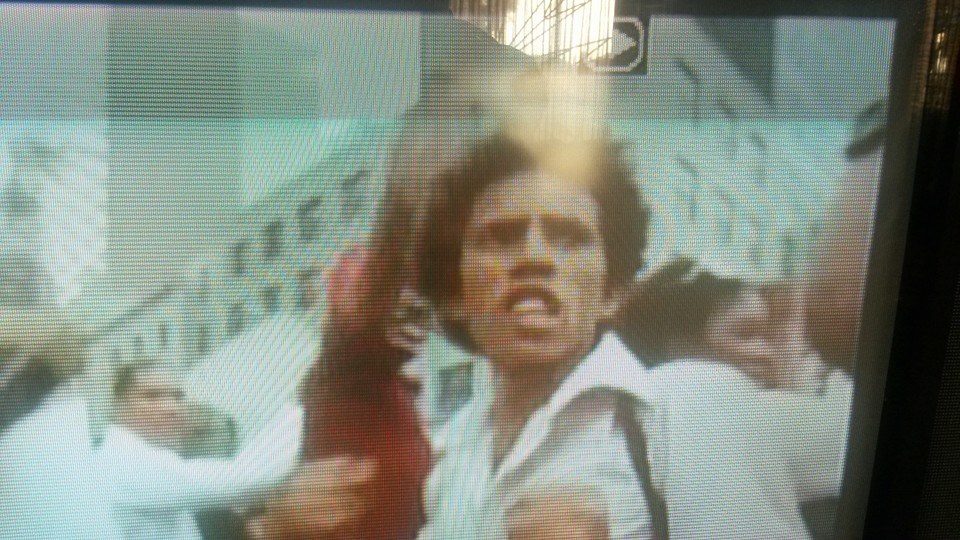 "I was enrolled at Goddard from February 1986 to the Autumn of 1988, when I was part of an action which resulted in the occupation of the school administration building, after which I left Vermont and went back to New York City, where I started my career as a radio and print journalist at WBAI radio and writing for various publications.
"Another noteworthy element of my time at Goddard was when I formed part of the editorial team that produced the Goddard newsletter, which we named The Polemic.
"I was a young person who by that time had already been in exile from South Africa since 1979 and I was deeply connected to the anti-war and anti-apartheid movements."
But Zenzile was not only heavily engaged in Goddard's courses and political atmosphere. (The school had a founding and long history as an "anti-fascist institition,", and its closing is itself commentary on contemporary society.) He was also one of the first witnesses to the birth of Phish.
"What certainly was quite exciting at the time was to see how Trey, John, Jeff, Page, and others developed the phenomenon that would later gain strong traction as Phish. They were very dedicated to developing their craft and really jelled well as a group. They also spent quite some time together just chilling out at the Burlington house, where they also regularly rehearsed before their gigs.
"It was certainly a different time then, but they developed a strong and loyal following among youngsters and specifically among college students, many aligned with a sort of non-mainstream worldview. Many of the people who came to the gigs were also admirers and followers of groups such as the Grateful Dead."
Those experiences has a deep effect on the life of a man already forged by conflict in South Africa. "Indeed," he writes, "it has been quite some time since I was with the guys from Phish or indeed anywhere, but my memories of Phish are indelibly imprinted into my memory, as it represented a most exceptional and vibrant part of my youth and a most invigorating part of my period of exile in the United States of America.
"Needless to say, there is so much that has happened in the ensuing years and, at times, it feels as if I have been caught up in a whirlwind, where, invariably, many things seemed to occur simultaneously or happened in a way that just makes one feel that I have not had time to just breathe.
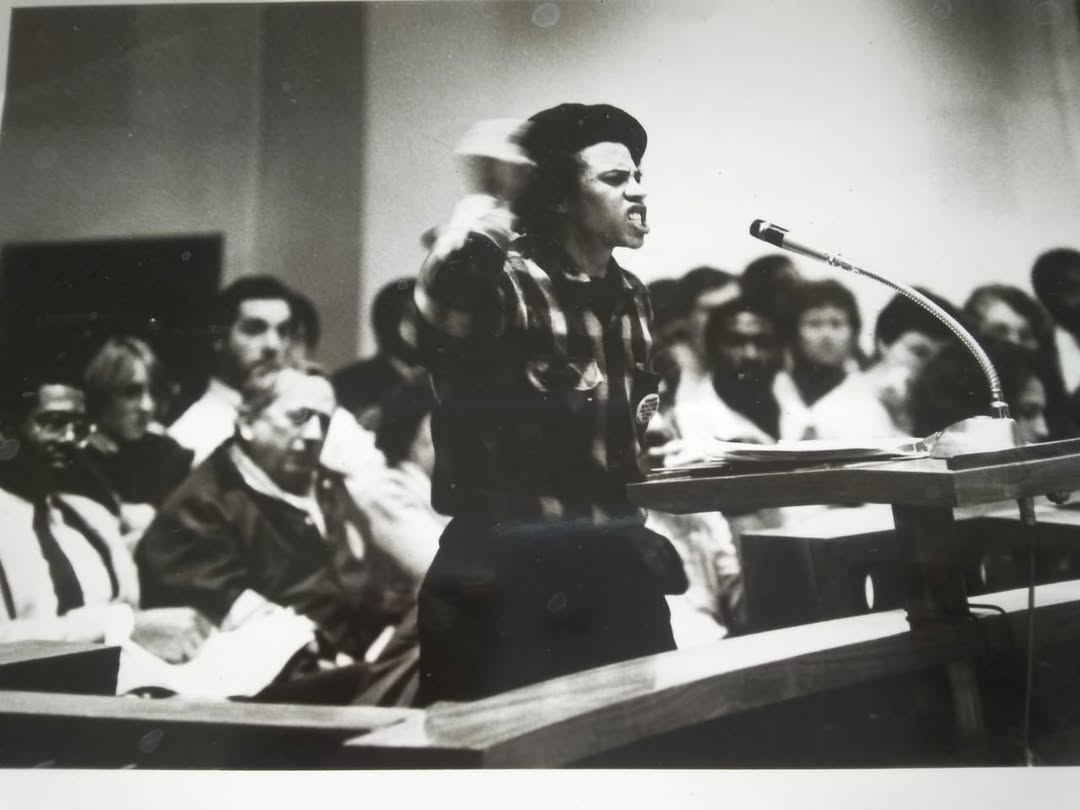 "Breaking through this maze of events has been somewhat of a daunting task for me, but there is no time like the present to go back and retrace my steps. I have so many things to share, so it should ideally be brought back to January of 1986, when I first encountered the Phish crew, the arrival at Goddard in February of that same year, our time at the Wolpe dorm, the gigs at which I read poetry with Phish at various venues such as Hunts in Burlington, joining Phish on stage when they were on the same bill as iconic poets Alan Ginsburg and Margaret Randall.
"Then there is the wonderful experience of being introduced to the music of bands such as the Greatful Dead, spending time in their home in Burlington while they practiced, smoked, and dropped a few bits and pieces of controlled substances.
"There is also the activism at Goddard, the many sessions trying to understand the numerous fights for justice around the world, the many gigs in the Goddard Haybarn, and the occupation that occurred at Goddard, after which I left for New York City.
"Then there is the time in New York City, where I joined WBAI Pacifica Radio as a reporter and later as a contributor to programs such as Behind the News and Where we Live, eventually serving as one of the Pacifica correspondents to the United Nations, when I also served as executive producer and presenter of the Africa Report.
"This was also a vibrant time of my activism, where I was part of many movements, including the anti war movements and the Citywide Coalition against police brutality, while all at the same time actively engaging to build the anti-apartheid movement.
"Then there is the experience of returning to my home in South Africa to vote for the very first time in my life during South Africa's first democratic elections, my return to the United States and my decision to finally end my exile and permanently return to South Africa.
"After that there was a stint at Bush Community Radio, where I produced several public interest programs and documentaries.
"After that there was the call of duty from the nation when I was appointed as a senior investigator to South Africa's Truth and Reconciliation Commission. Here I successfully investigated hundreds of cases of gross violations of human rights of people who had been killed, maimed, tortured or disappeared during the apartheid era.
"After that there is my return, once again to journalism, first at Bush Community Radio producing Bushmanbeat, a current affair and music program, and later, serving as an investigative reporter with numerous news outlets,
"Indeed, journalism has consumed most of the last three decades of my life, where I have edited and written for numerous investigative and arts, culture and heritage magazines and newspapers.
"Since coming home in 1995 I continued what I was part of in exile, notably the resurgence of the Khoi and San indigenous people, whose heritage, land, culture and identity had been nearly completely dispossessed and obliterated by colonialism and apartheid in South Africa.
"The resurgence has also consumed a significant part of my life, as, even in the new democratic dispensation our people have not been recognised, restituted or restored.
"I have travelled all over my country, from the Cape Town of my birth to the Kalahari and every part of this country as part of the small group that has built this resurgence into a formidable movement that eventually forced our government to pass a somewhat watered down legislation through which there can be some recognition of our country's foundational peoples.
"As part of this process, I have gone through the necessary ancient !Nau initiation rituals and am now the head of the Gorinhaiqua Cultural Council [a South African First Nation community that advocates for the recognition and preservation of the culture and heritage of the Khoi and San people], which has been a very instrumental component of the resurgence.
"I also edit several indigenous newspapers including First Nations News and Indigenous Footprint."
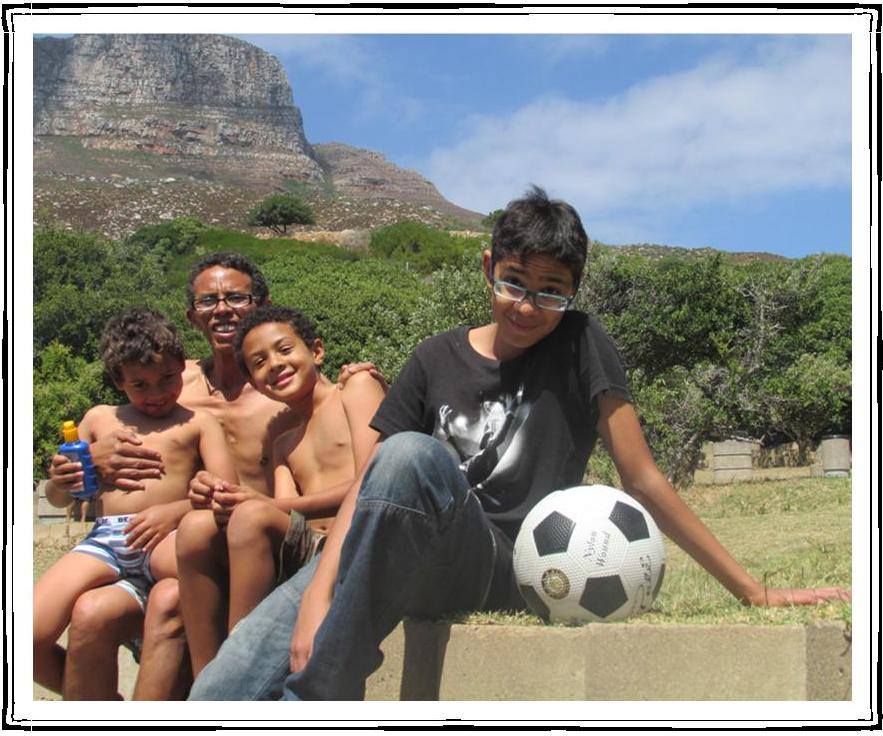 Zenzile, like Phish fans generally, has of course grown, now very much an adult and family man. "I have three sons, Tijan (Riley) Daniel and Luke." He also remains heavily engaged, in poetry and in social activism.
"Over the years, I have put many of my thoughts on public platforms such as Facebook and also authored Jakaranda Time (about the TRC) and a collection of poetry titled There are No More Words.
"I am currently working to secure a place of anchorage in Cape Town for the celebration of Khoi and San First Nations heritage, history, culture, language, and indigenous knowledge systems. I am also working on a reflection of my three decades in journalism titled Drinks after Deadline.
As of August, he reported that he was "in the process of producing an updated version of the poetry book, which will include some of my most recent pieces which were authored after that book was published. A digital copy, which will include an audio book, will be available for sale online soon." We hope to have more information about, and a link to order, that soon.
Comments
You must be logged in to post a comment.
 Phish.net
 The Mockingbird Foundation
Side note - it’s crazy he can recall names of professors from 40 years ago. I can’t even remember who my thesis advisor was from grad school and that was only a year ago haha.
this is the travesty of the days we live in atm .